Dental Implants in San Francisco: What You Need to Know Before You Commit
)
Losing a tooth goes beyond your smile. It affects the way you chew your food, speak and even how you feel when you go into a room. If you're reading this, you're likely missing at least a tooth, and you've likely heard the word “implant” from someone you know, a hygienist or maybe a late night Google search. Let's take a step back and just discuss what this really means.
Derrick Chua of Chua Family Dental, San Francisco, has been doing this for years with his patients. Today, we will discuss what Dental Implants San Francisco are, who they are for, the actual process of the implant day-by-day, and how much it will cost you. No fluff, no sales pitch, just the true information you need before you get in the chair.
What Are Dental Implants, Exactly?
Dental implants are small metal posts made of titanium, that are inserted into the jawbone directly by a dentist. The bone then fuses to that post during a process known as osseointegration, which takes place over the course of the next few months. After the bond is secure, it becomes an artificial tooth root, and a custom-made crown is placed on top. The final product is both natural-looking and natural-feeling and is as functional as a tooth.
Here is the short list. What sets implants apart from other tooth replacement choices is that it's not just the visible portion of the tooth that gets replaced, it is the root, too. Bridges and dentures rest on your gums or rest against adjacent teeth. Implants become a part of your real bone. It's a significant distinction and why implants can last for decades when properly maintained.
According to the American Dental Association, dentists have used implants to replace missing teeth for many years, and they are a well-tested solution that has proven to be both highly effective and safe in the long term when patients are good candidates and properly maintain their implants.
Why People in San Francisco Choose Implants Over Other Options
While each case is unique, there are some common reasons why people may decide to opt for implants after considering their options.
Bridges vs. Implants
A dental bridge replaces the missing tooth by holding artificial teeth in place with healthy neighboring teeth. It works, and in many cases is less of an initial cost. The problem with this is, when your dentist is building a bridge, he needs to cut off the neighboring teeth, even if they are healthy. Over time, missing tooth roots will likewise not stop all-natural bone loss. A dental implant, however, doesn't require you to compromise the health of your adjacent teeth, and it even helps maintain healthy jaw bone.
Dentures vs. Implants
Removable dentures are the least expensive and most convenient, an important consideration for many families. However, they can slip, they need to be joined with adhesive, and many people who wear dentures find that there are sore spots or certain foods they have a problem eating. The frustrations can be resolved with the use of implant-supported dentures or full-arch implants. The implants are created to solve the problem of moving dentures during eating.
This does not automatically mean that implants are the “best” option for all. The costs, health history and number of teeth to be replaced all play a role in the decision. Which is why a proper consultation is more important than a typical online comparison chart.
Am I a Good Candidate for Dental Implants?
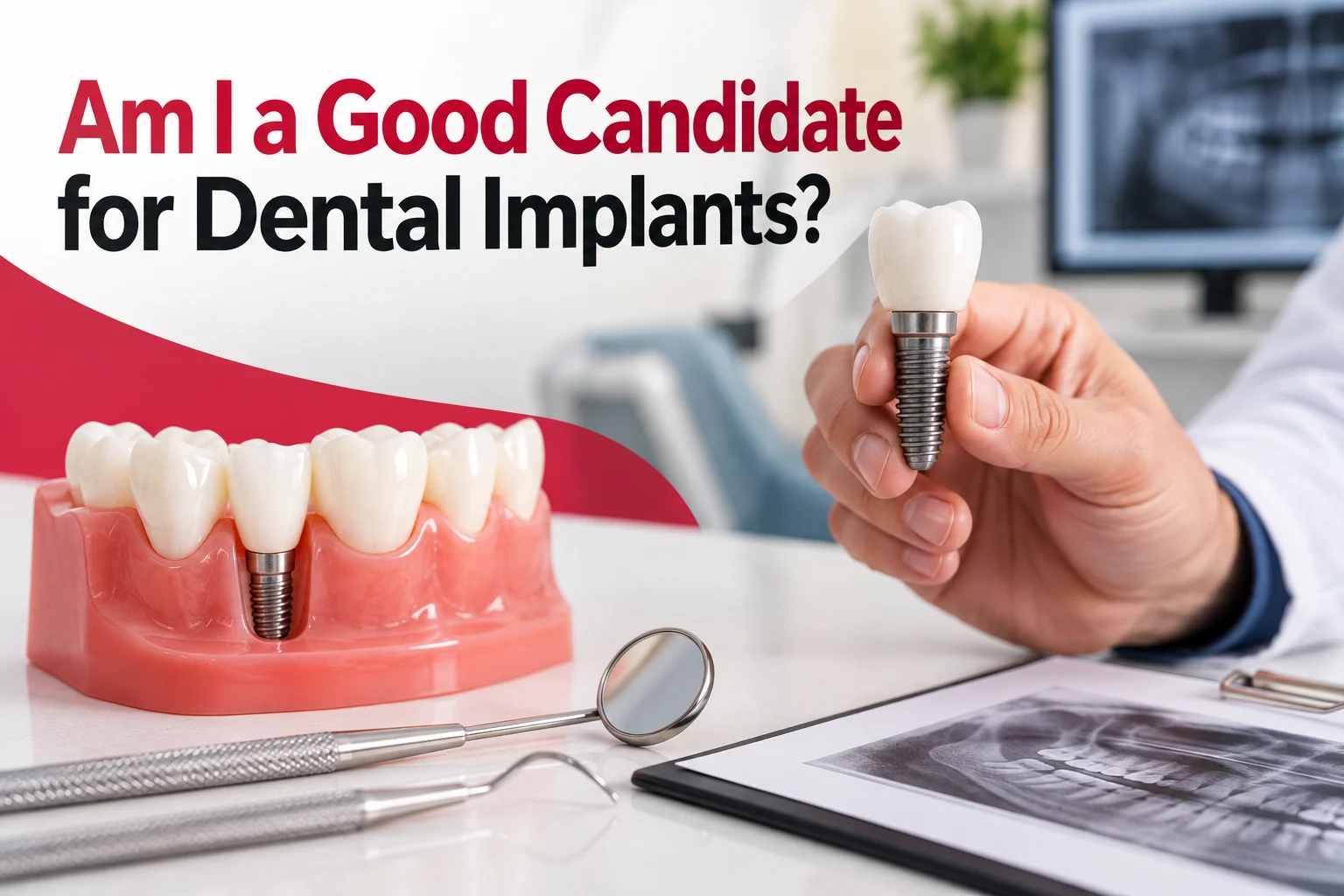
Ideal candidates typically have a strong jawbone structure that is capable of supporting the implant, healthy gums, and no other medical issues that would adversely affect healing, such as uncontrolled diabetes. While smoking won't stop you from having implants placed, healing may be longer, and the success rate goes down just a bit, most dentists will at least discuss reducing smoking during your healing period.
That doesn't mean you are automatically excluded because you have lost bone density from a long time wearing dentures or from periodontal disease. In many cases, it is possible to regenerate sufficient structure to place an implant through bone grafting. It just adds time to the overall process.
Age is not necessarily a limiting factor, either. Teens with growing jaws typically will have to wait, although there is no maximum age limit. As long as the patient is in a healthy condition, many individuals in their 70s and 80s receive successful implants.
The only true diagnosis that can be made is the clinical exam and imaging, which leads us into the process.
The Dental Implant Process, Step by Step
It's typically the most crucial aspect of the treatment that patients will focus on, and rightly so. Nobody can be pleased with the shock of an unpleasant procedure involving the jawbone. This is the usual scenario.
Initial Consultation
Your dentist checks your teeth, gums and jaw, and uses x-rays or a 3D scan to determine the amount of bone density and make precise implant placement. It is also the time to discuss your medical and medication history, and address any concerns you may have. Good time to ask crass questions. How many appointments will be required for this? What happens if the bone graft doesn't take? How much do they cost altogether? If the dentist is confident in what they do, they will not avoid such questions.
Tooth Extraction, If Needed
If the affected tooth is still standing, it is first removed. In rare cases, the implant can be placed on the day of extraction. In other instances, your dentist will opt to allow the socket to heal for about a few months prior to the placement of the implant, particularly if you had infection.
Bone Grafting, If Needed
This is not necessary for everyone, but if your jawbone is not strong enough to hold an implant in place, a bone graft can be used to strengthen the jaw. Depending on the amount of bone that needs to regenerate, healing can take a few months to as close to a year. It is an agonizing wait for many patients, but hastening this process is the reason for the failure of implants later.
Implant Placement
This is the part that involves surgery. The dentist will insert the titanium post into your jaw under a local anesthesia, and may consider sedation options if this is preferable and appropriate for your case. Patients typically report more pressure than sharp pain, and any soreness the following day is typically easy to treat with over-the-counter pain relief.
Healing and Osseointegration
This is where the real hard part comes in with patience. The bone fusion around the implant post will take about three to six months. This can be when you may have a temporary crown or a gap, depending on location and how your dentist would do it. This is one of the most frequent causes of implant failure, and is something that shouldn't be passed over, no matter your hurry to complete the procedure.
Abutment and Crown Placement
After a successful osseointegration, a small connector piece called an abutment is attached to the implant post. This crest is customized to fit the your natural teeth's color and shape and is attached to the top. This is typically the last appointment, and many patients report that this is the best part of the series.
How Much Do Dental Implants Cost in San Francisco?
This is typically where the “real discussion” should take place as pricing is very different depending on the specific circumstances. A single implant, post, abutment and crown typically costs several thousand dollars. Some factors which will increase or decrease the cost are:
If you require either a bone graft or a sinus lift first. The number of teeth that are to be replaced. Single crowns, a bridge or a full-arch restoration. The materials used for the crown itself.
This is really hard to estimate without an examination and really suspicious when a dentist gives a definite price over the phone, without first seeing your mouth. Instead, Chua Family Dental will outline the facts of your treatment plan before any work is done, so you don't get surprised later.
Does Insurance Cover Dental Implants?
Sometimes, partially. Previously, dental insurance did not cover implants, which were regarded as a cosmetic treatment. In recent years that's changed, and more plans are now available that pay for a percentage of some of the costs, such as the crown or some of the costs, but not the surgical placement of the crown.
Chua Family Dental accepts most insurance plans, such as Delta Dental, MetLife, Cigna, Aetna, and Blue Cross Blue Shield. That would be a lot of headache if it had to be discovered after the treatment, but a staff member can help you verify your benefits prior to treatment.
Recovery: What to Expect
Patients return to normal activities within a day or two of the implant placement surgery. The swelling and slight discomfort are usually at their peak around day two or three and diminish. The first week or so is a very comfortable weeks worth of soft foods. Consider breakfast foods such as scrambled eggs, soup, mashed potatoes or yogurt. Steer clear of crunchy, chewy or very hot things for a while.
The recovery phase (osseointegration) is not characterized by any symptoms. You walk around normally as the bone does its work in silence. You can schedule follow-up appointments so that your dentist can confirm that everything is healing properly.
Caring for Your Implants Long-Term
Here are some good news: implants do not get cavities. However, if oral hygiene isn't maintained, gum tissue around them can certainly end up having problems. The most common problem after initial healing that results in implant failure is peri-implantitis, an infection around the implant. Brushing twice a day, flossing and regular professional cleaning is as important with implants as it is with natural teeth, if not more so.
Another risk factor to mention is grinding your teeth while sleeping. If you clench or grind, a nightguard will help the natural teeth and your investment in the implant.
Common Myths About Dental Implants
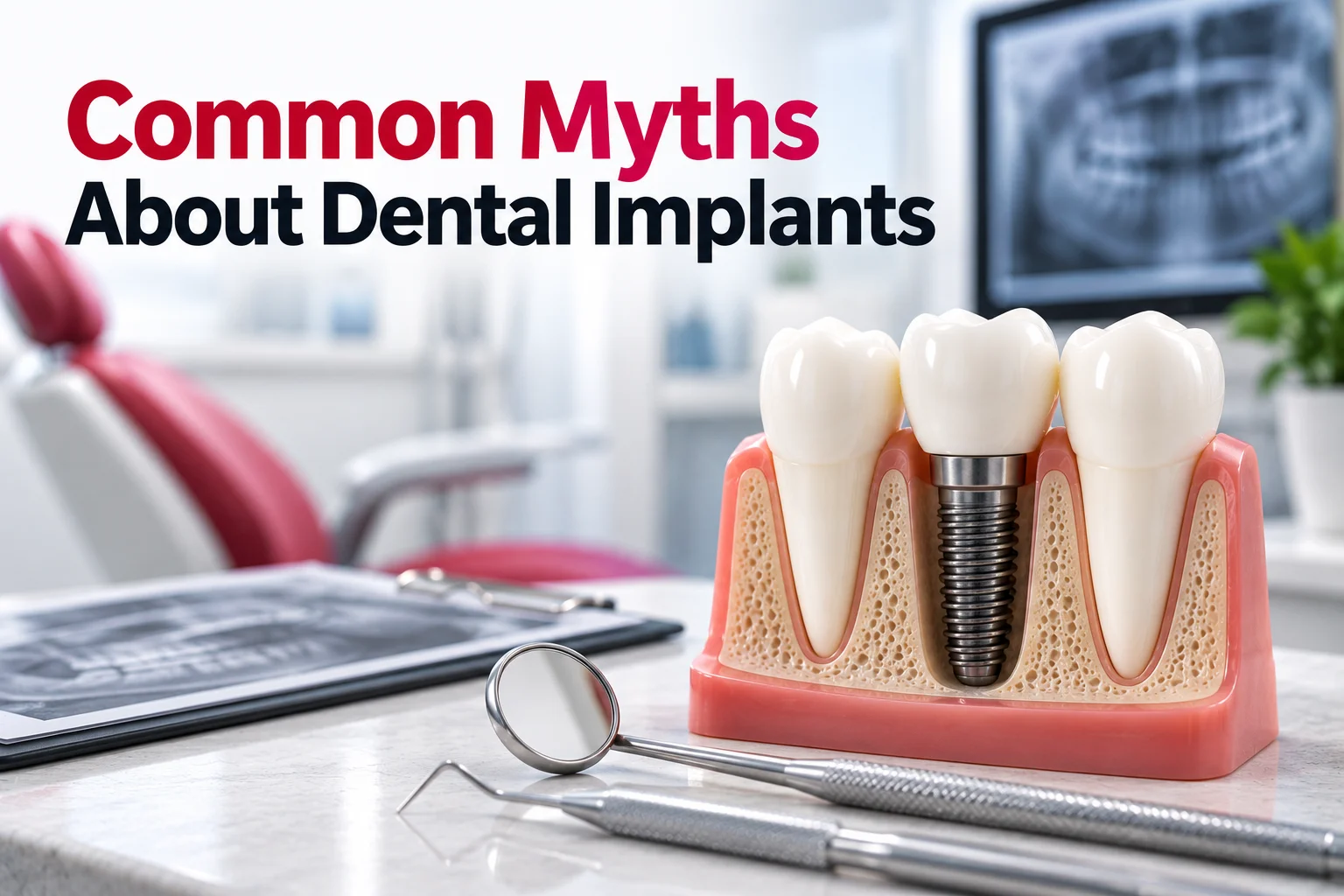
Many people are concerned about implants due to old information or exaggerated stories circulating. It's best to set aside a few of these.
“Implants are for senior citizens.” Not true. The primary criteria is the completion of growth of the jaw around the late teen years. Following this, there is no cap on how old you can be. Many individuals in their 60s, 70s and later have implants and they work well.
The surgery will be very painful. This one is always mentioned and it's primarily about fear. Local anesthesia is used to numb the area during the procedure and most patients report it to be less uncomfortable than a tooth extraction. Some soreness, sure. Agony, not really.
"Implants look fake." Occasionally, older dental work had that issue. Crowns are made to match and match the shape of your existing teeth and are crafted by hand in modern times. Sometimes even dentists have to check their X-rays twice in order to be able to identify which tooth the implant is in.
Why is it that I can get a bridge for the same price instead? That's true, with bridges there is a lower initial cost. But they do not halt bone loss; they are often replaced earlier; and they necessitate grinding down healthy neighboring teeth. In the long run, over 10 or 20 years, implants are often the more sensible option, rather than the more aesthetically pleasing one.
“Once it's in, I do not have to worry about it. This is the myth that is the most problematic. But implants require daily brushing, flossing and periodic examinations. Failure to care for the implant may result in an infection of the gums around the implant site this is the most common reason for implant failure (outside of the initial healing phase).
What to Ask Before You Commit to Treatment
It's important to have some specific questions to ask before scheduling implant surgery anywhere. How many implants has the dentist done and for how long? If a bone graft is required midway through, what do they do? What does it cost and what would be the reason for the extra fee? Do patients feel anxious about dental work and can they be sedated?
If a dentist is willing to answer these in an unapologetic way without being unclear or confused then it is a good sign. The philosophy at Chua Family Dental has always been to explain things too much.
Why Choose Dr. Derrick Chua for Your Implants
Dr. Chua's philosophy for his practice is that patients should be well-informed about what is being done to them and not have to deal with jargon or a hurried pace. He's bilingual, able to converse with patients in Tagalog, Fukienese, Mandarin, Spanish and English, which is important in a city as multicultural as San Francisco. Families around the Mission District and around the world select him because he is able to communicate effectively about patient care options and provides answers without rushing.
You can read more about his background on theAbout Dr. Chua page, or browse the full list of services, includingImplant Dentistry, directly on the practice site.
Frequently Asked Questions
How long do dental implants last?
With proper care, implants can last 20 years or longer, and many last a lifetime. The crown on top may eventually need replacement due to normal wear, but the titanium post itself is built to be permanent.
Is getting a dental implant painful?
Most patients report less discomfort than they expected. The procedure is done under local anesthesia, and any soreness afterward is typically manageable with over-the-counter medication.
How long does the entire implant process take?
It varies widely. A straightforward single implant with no grafting needed might take three to six months from start to finish. Cases requiring bone grafts or multiple extractions can take closer to a year.
Can I get all my teeth replaced with implants?
Yes. Full-arch implant solutions, sometimes called "All-on-4" or similar systems, use a small number of implants to support a full set of replacement teeth. It's a common option for patients who've lost most or all of their teeth.
What happens if I don't replace a missing tooth?
The jawbone under a missing tooth begins to lose density over time without a root to stimulate it. Neighboring teeth can also shift into the gap, which throws off your bite and can lead to further dental problems down the line.
Do dental implants look natural?
Yes. Crowns are custom shaded and shaped to match your surrounding teeth, and most people can't tell the difference between an implant and a natural tooth just by looking.
If you're considering implants and want a clear, honest assessment of your options, book an appointment or call the office directly. Getting real answers from an exam beats guessing based on what you read online, even a guide as thorough as this one.
 Book
Book Call
Call Map
Map Hours
Hours